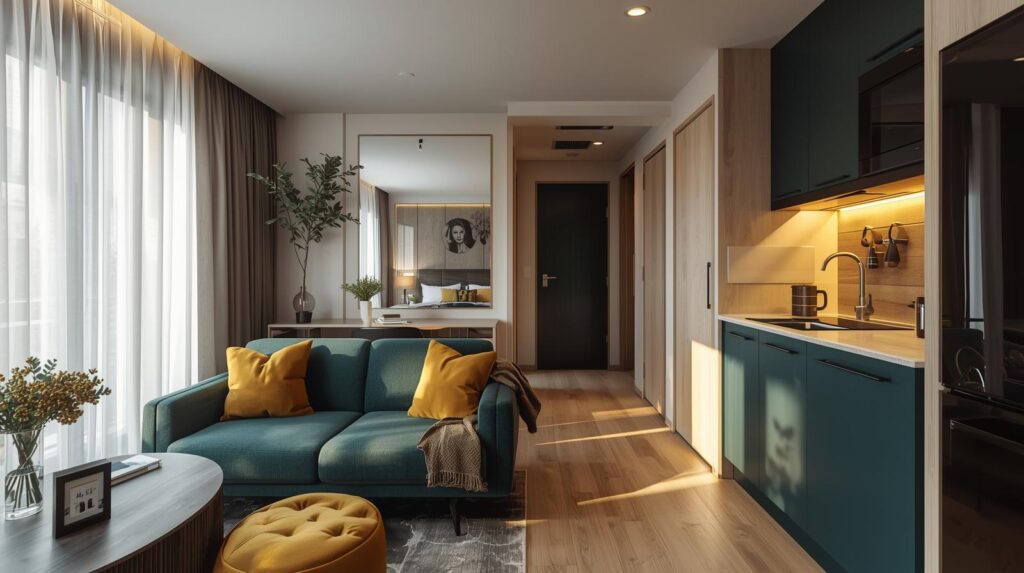
Explore 20 clever studio apartment design ideas to optimize your small home. From wall beds to vertical storage hacks, learn how to style a compact apartment for comfort, function, and beauty.
Living in a studio apartment may feel like a puzzle at first—everything must fit into one room, yet still feel open and livable. The trick? Designing smart layouts that give you privacy, functionality, and style without taking up extra square footage.
Here are 20 creative studio apartment design ideas to help you live large in a small space.
1. Lofted Sleeping Area
Elevate your dreams—literally! Raising your bed creates an extra “floor” where your studio suddenly feels bigger.
A loft bed frees up floor space for a study nook, closet, or mini lounge underneath.
Steps to Try:
- Install a sturdy loft frame or build a raised platform.
- Style the lower area with a desk, shelves, or sofa.
Cost: Prefab loft frame $300–$900; custom woodwork $1,500+.
Pros:
- Doubles functional space.
- Adds a fun, youthful vibe.
Cons:
- Not ideal for low ceilings.
- Harder to access for older residents.
Tip: Use under-bed lighting or hanging plants below for cozy charm.
2. Wall Bed Solution
A bed that disappears at dawn—it’s like a secret you share with your home.
A wall bed (Murphy bed) folds up to give you free floor space during the day.
Steps to Try:
- Choose a design with shelves or a built-in desk.
- Anchor it safely to the wall.
Cost: $800–$3,000 depending on features.
Pros:
- Creates instant open space.
- Perfect for compact studios.
Cons:
- Higher upfront cost.
- Needs secure installation.
Tip: Customize the underside with artwork or mirrors for double duty.
3. Room Divider Hack
Dividers are like magic curtains—instantly turning one room into two.
Curtains, folding screens, or shelving can separate living and sleeping zones without real walls.
Steps to Try:
- Place a tall bookshelf as a partition.
- Hang sheer curtains for an airy feel.
Cost: $60–$400 depending on style.
Pros:
- Adds privacy.
- Flexible and removable.
Cons:
- Can make rooms feel tighter if overused.
Tip: Go for open shelving instead of solid dividers to keep light flowing.
4. Sleeper Sofa Setup
By day, it’s a lounge; by night, it’s a cozy bed—true two-in-one living.
A convertible sofa makes your main area multifunctional.
Steps to Try:
- Invest in a durable sleeper sofa.
- Pair it with storage ottomans for extra function.
Cost: $400–$2,000.
Pros:
- Space-saving and practical.
- Guest-friendly.
Cons:
- Can be heavy and bulky.
Tip: Pick a design with hidden storage to keep bedding handy.
5. Platform Zoning Layout
Give your studio a stage—raised levels make areas feel distinct.
Platforms help visually separate living, sleeping, and dining zones.
Steps to Try:
- Build a raised bed area with storage drawers.
- Highlight with rugs or lighting.
Cost: DIY $200–$700; professional build $1,200+.
Pros:
- Adds storage.
- Clearly defines spaces.
Cons:
- Requires sturdy flooring.
Tip: Edge the platform with LED strips for a modern glow.
See More | 20 Stylish Small Bedroom Design Hacks You’ll Love
6. Wall-Mounted Desk
Work when you need, fold away when you don’t—your home office on demand.
Fold-down desks are compact yet functional for remote work.
Steps to Try:
- Mount a folding desk near a window.
- Pair with a collapsible chair.
Cost: $100–$400.
Pros:
- Doubles as dining or hobby space.
- Saves square footage.
Cons:
- Small surface area.
Tip: Keep it near power outlets for easy charging.
7. See-Through Furniture
Transparency makes rooms feel larger—like magic for the eyes.
Glass and acrylic furniture give an airy, uncluttered look.
Steps to Try:
- Use a clear acrylic table or ghost chairs.
- Mix with solid wood pieces for balance.
Cost: $150–$600.
Pros:
- Expands visual space.
- Modern and stylish.
Cons:
- Requires frequent cleaning.
Tip: Layer with textured rugs or fabrics to soften the look.
8. Compact Kitchen Zone
Small kitchens can still pack big flavor—smart layouts make cooking easy.
Single-wall or galley-style kitchens are efficient and tidy.
Steps to Try:
- Use floating shelves instead of bulky cabinets.
- Add magnetic strips for utensils.
Cost: $1,000–$5,000 depending on remodel.
Pros:
- Keeps everything within reach.
- Feels less cramped.
Cons:
- Limited counter space.
Tip: Use a rolling kitchen cart for extra prep and dining.
9. Vertical Storage System
When floor space runs out, let your walls do the heavy lifting.
Tall shelving and wall racks maximize storage without cluttering.
Steps to Try:
- Build shelves up to the ceiling.
- Add pegboards for small items.
Cost: $120–$800.
Pros:
- Keeps clutter away.
- Utilizes wasted height.
Cons:
- Hard to reach upper shelves.
Tip: Store seasonal or rarely used items at the top.
10. Built-In Dining Bench
Cozy, smart, and stylish—your dining nook can also store your secrets.
Banquette seating doubles as hidden storage.
Steps to Try:
- Build a bench with lift-up lids.
- Pair with a round dining table.
Cost: $500–$1,500.
Pros:
- Saves space.
- Provides extra seating.
Cons:
- Fixed in place.
Tip: Add colorful cushions to make it inviting.
11. Full-Length Curtains
Ceiling-to-floor drapes create drama while making ceilings look taller.
Curtains add privacy and style while defining zones.
Steps to Try:
- Mount rods just below the ceiling.
- Choose light, flowing fabrics.
Cost: $100–$400.
Pros:
- Enlarges room visually.
- Adds softness.
Cons:
- Needs regular cleaning.
Tip: Stick to light neutrals for timeless elegance.
12. Movable Furniture Layout
A flexible home is a happy home—wheels let you design on demand.
Rolling pieces adapt to different needs and layouts.
Steps to Try:
- Add casters to tables or shelves.
- Invest in a mobile kitchen island.
Cost: $150–$800.
Pros:
- Easy to rearrange.
- Multi-purpose.
Cons:
- Cheap wheels may break easily.
Tip: Always lock wheels to avoid movement.
13. Cozy Sleeping Nook
A tucked-in bed makes your space feel like a snug retreat.
Placing your bed in a corner or alcove frees up central living space.
Steps to Try:
- Push bed into a niche or corner.
- Use wall sconces for soft lighting.
Cost: $50–$500.
Pros:
- Feels private.
- Leaves more floor space.
Cons:
- Limited access on one side.
Tip: Swap bulky nightstands for floating shelves.
14. Adjustable Tables
One table, endless uses—your furniture should work as hard as you do.
Expandable or folding tables transform depending on your needs.
Steps to Try:
- Use a drop-leaf dining table.
- Consider adjustable-height designs.
Cost: $200–$700.
Pros:
- Adaptable.
- Perfect for small gatherings.
Cons:
- Less sturdy when extended.
Tip: Pair with stackable chairs for easy storage.
15. Hidden Bed Storage
Think of your bed as a secret chest—it’s more than just a mattress.
Under-bed drawers and bins are a must in small apartments.
Steps to Try:
- Buy a storage bed frame.
- Use rolling containers.
Cost: $50–$800.
Pros:
- Great for off-season items.
- Keeps room tidy.
Cons:
- Bulky bins can be awkward.
Tip: Use vacuum-sealed bags for clothes to save space.
16. Minimalist Styling
A little less creates a lot more—simplicity is space’s best friend.
Minimalism keeps a studio fresh, calm, and uncluttered.
Steps to Try:
- Declutter and keep only essentials.
- Stick to a neutral color palette.
Cost: Minimal, depends on furniture.
Pros:
- Easy to maintain.
- Makes rooms feel bigger.
Cons:
- May feel plain if overdone.
Tip: Use textures like rugs, throws, or plants for warmth.
17. Layered Lighting Setup
Light shapes mood—layer it, and your home will glow beautifully.
Multiple light sources add depth and coziness.
Steps to Try:
- Combine floor lamps, sconces, and string lights.
- Install dimmers.
Cost: $150–$1,000.
Pros:
- Warm, inviting atmosphere.
- Flexible for day and night.
Cons:
- More fixtures to maintain.
Tip: Place mirrors to reflect light and amplify brightness.
18. Mounted TV Wall
Free the floor and keep it sleek—wall-mounted TVs modernize instantly.
Ditch bulky TV stands and reclaim your space.
Steps to Try:
- Use a swivel TV mount.
- Hide cables neatly.
Cost: $50–$300.
Pros:
- Saves surface space.
- Contemporary look.
Cons:
- Requires wall drilling.
Tip: Mount at eye level for best comfort.
19. Foldable Dining Table
Dinner appears when needed and disappears when you’re done.
Wall-mounted folding tables are perfect for tiny kitchens.
Steps to Try:
- Attach table to the wall near kitchen.
- Pair with folding chairs.
Cost: $100–$400.
Pros:
- Compact.
- Quick setup for meals.
Cons:
- Smaller surface area.
Tip: Match design with your kitchen finishes.
20. Balcony Living Extension
A balcony can be your bonus room—a hidden gem for city living.
Balconies serve as an outdoor retreat or mini lounge.
Steps to Try:
- Add folding chairs, plants, and fairy lights.
- Install weatherproof storage.
Cost: $200–$800.
Pros:
- Expands living space.
- Relaxing outdoor zone.
Cons:
- Limited use in bad weather.
Tip: Keep collapsible furniture for easy storage indoors.
FAQs About Small Studio Apartment Design
1. What’s the smartest design for a 300 sq ft studio?
A wall bed paired with vertical storage and a foldable dining setup maximizes usability.
2. How do I make my studio feel more open?
Use mirrors, light colors, and transparent furniture to visually expand the space.
3. What’s the average budget for decorating a studio?
Between $2,000–$7,000 depending on whether you buy modular furniture or custom pieces.
4. How can I create separation without walls?
Use curtains, shelving dividers, or raised platforms for zoning.
5. Is a minimalist approach really effective in tiny apartments?
Yes—fewer items make cleaning easier, reduce clutter, and create visual calm.