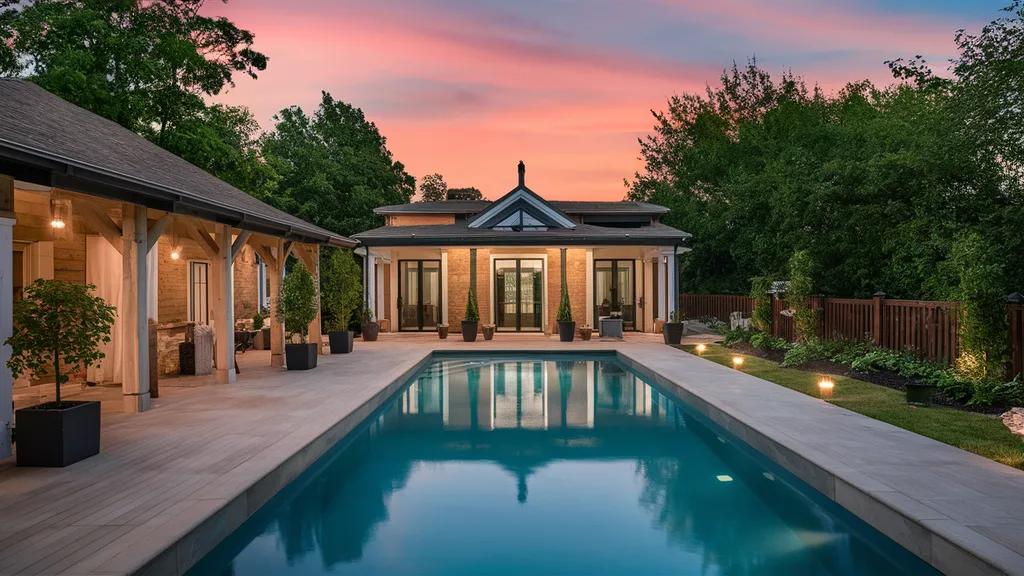
A garden pathway does more than connect one part of your yard to another. It controls how people experience your outdoor space. A good path quietly guides visitors through flowers, around trees, toward seating areas, and into hidden corners they may never have noticed otherwise. A great path tells a story.
Landscape design surveys consistently show that professionally designed pathways rank among the top outdoor features homeowners want in backyard renovations. Studies from real estate and landscaping professionals also suggest that attractive hardscaping can increase perceived property value by as much as 10% to 20%, especially when combined with mature landscaping and outdoor living areas.
The reason is simple. Humans naturally follow paths. A winding trail through a garden creates curiosity in the same way a good book makes you turn the next page. You want to know what comes next.
Whether your outdoor space is a tiny urban courtyard or a sprawling backyard, the right pathway can completely change how it feels and functions.
Natural Stone Garden Pathway for Timeless Elegance
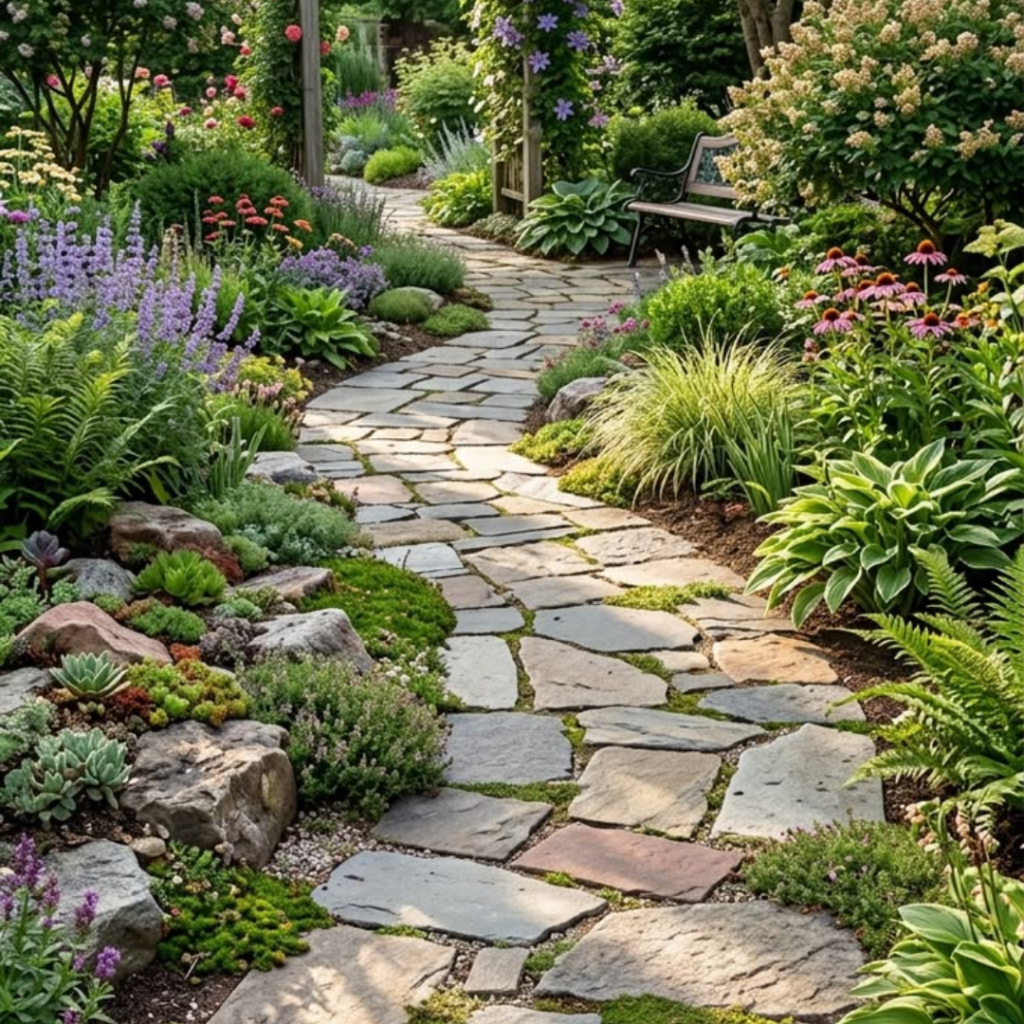
A natural stone garden pathway remains one of the most popular choices because it looks as though it has always belonged in the landscape.
Stone ages gracefully. Rain improves its character rather than damaging it. Moss grows between the joints and somehow makes everything look more expensive.
Why it works
Natural stone blends into almost every garden style including cottage gardens, modern landscapes, woodland retreats, and Mediterranean courtyards.
Tips
- Mix stone sizes for a more natural appearance.
- Leave small spaces for creeping plants.
- Use edging to prevent movement over time.
- Choose locally available stone to reduce costs.
Steps
- Mark the route using rope or garden hose.
- Remove grass and topsoil.
- Add a compacted gravel base.
- Position stones evenly.
- Fill joints with sand or ground cover plants.
Cost
- Budget installation: $8 to $15 per square foot
- Mid-range installation: $15 to $30 per square foot
- Premium installation: $30 to $60+ per square foot
Pros
- Extremely durable
- Timeless appearance
- Increases property appeal
- Requires little maintenance
Cons
- Higher installation cost
- Heavy materials require labor
Walking on a stone pathway feels like stepping through the pages of an old English garden book.
Gravel Garden Pathway for Affordable Charm
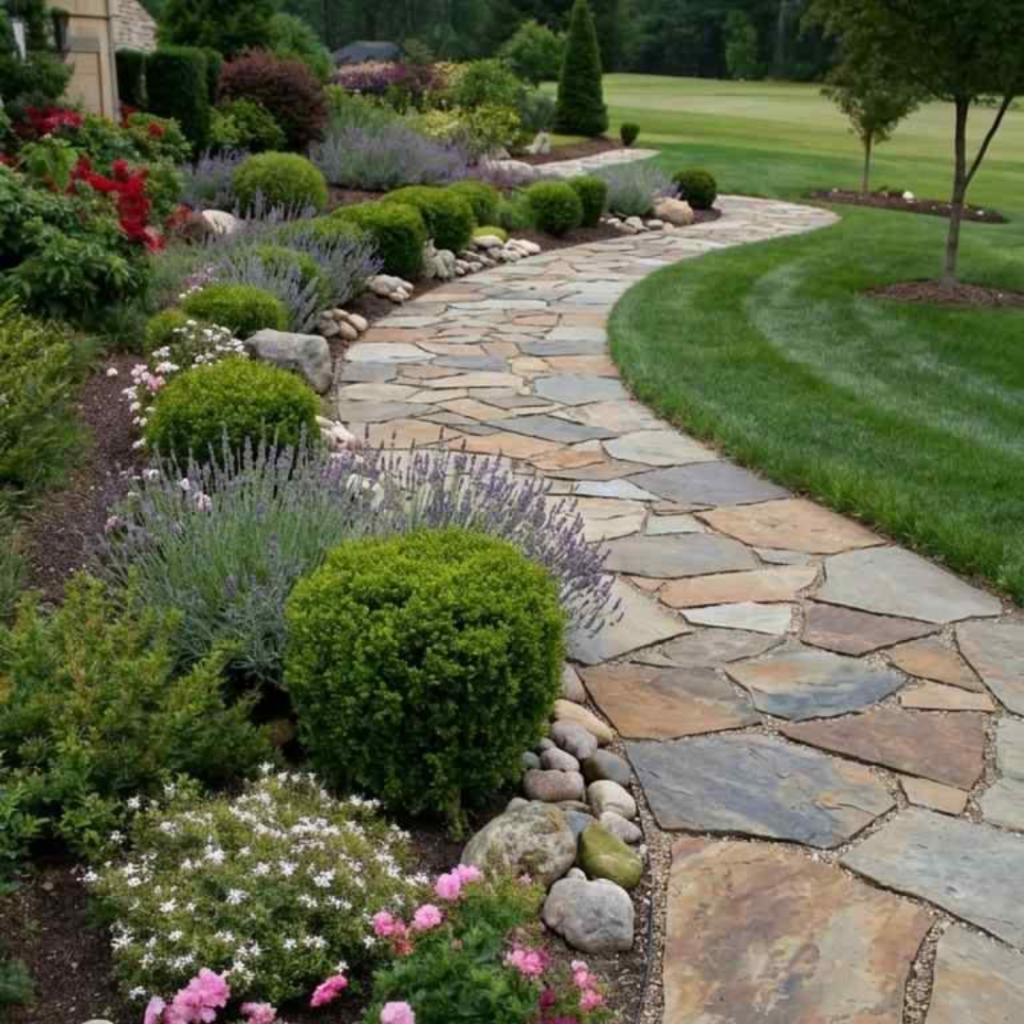
A gravel pathway proves that expensive-looking landscaping does not always require expensive materials.
Gravel creates texture, sound, and movement. The soft crunch under your feet adds an unexpected sensory experience that concrete simply cannot offer.
Why it works
Gravel suits rustic gardens, farmhouse landscapes, cottage gardens, and modern minimalist spaces.
Tips
- Install landscape fabric underneath.
- Use edging to contain spreading stones.
- Choose angular gravel for better stability.
- Avoid very fine gravel on slopes.
Steps
- Outline the path shape.
- Excavate several inches of soil.
- Install weed barrier fabric.
- Add compacted base material.
- Spread gravel evenly.
Cost
- Budget: $2 to $5 per square foot
- Mid-range: $5 to $10 per square foot
- Premium decorative gravel: $10 to $20 per square foot
Pros
- Affordable
- Easy installation
- Excellent drainage
- Flexible design options
Cons
- Requires occasional refilling
- Can shift under heavy traffic
Gravel paths sound like summer vacations and countryside mornings.
Stepping Stone Pathway Through Grass
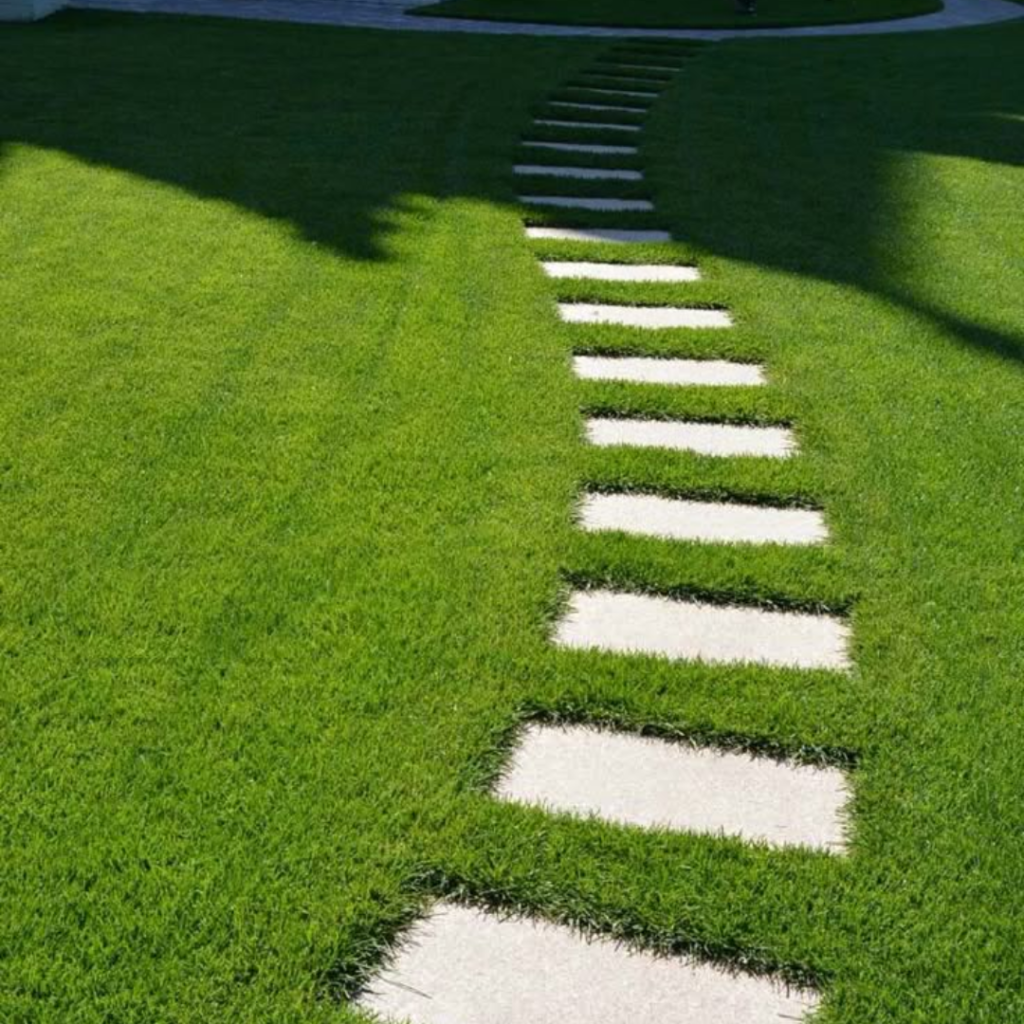
Few garden designs feel more whimsical than stepping stones floating through green grass.
This style creates the feeling that the garden grew first and the pathway politely asked permission to pass through.
Why it works
The spacing between stones preserves greenery while creating a relaxed and informal appearance.
Tips
- Keep spacing comfortable for walking.
- Use stones with textured surfaces.
- Avoid overly small stepping stones.
Steps
- Lay out walking positions naturally.
- Cut turf sections carefully.
- Dig shallow recesses.
- Position stones flush with the grass.
- Fill gaps around edges.
Cost
- Budget: $100 to $300
- Mid-range: $300 to $800
- Premium stone installations: $800 to $2,500+
Pros
- Beautiful natural appearance
- Minimal material use
- Easy customization
Cons
- Grass requires trimming around edges
- Can become slippery when wet
It feels less like walking to the garden and more like dancing through it.
Brick Garden Pathway for Classic Character
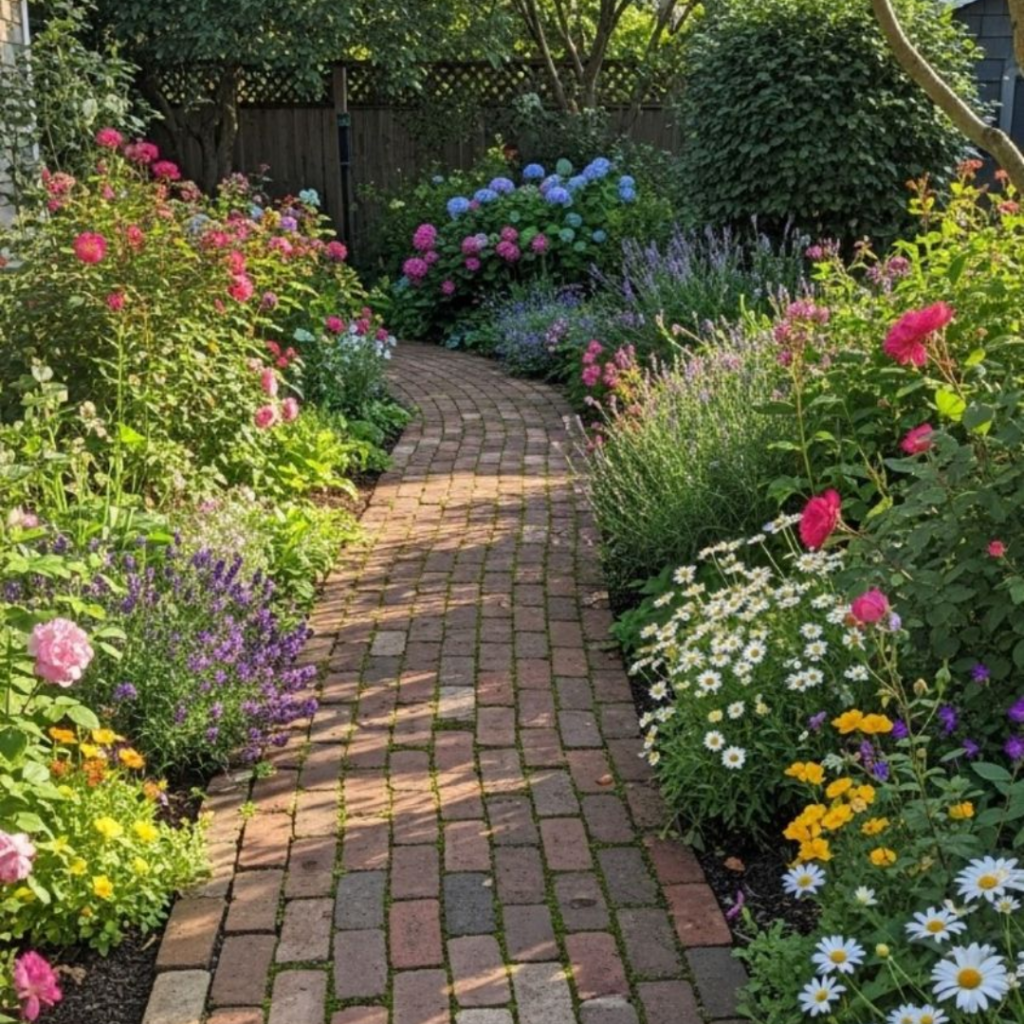
A brick garden pathway offers warmth that few materials can match.
Brick develops personality with age. Small imperfections become part of its charm rather than flaws.
Why it works
Brick complements traditional homes, colonial architecture, cottage gardens, and farmhouse landscapes.
Tips
- Use herringbone patterns for strength.
- Seal bricks in wet climates.
- Match brick color to home exterior.
Steps
- Excavate path area.
- Install compacted gravel base.
- Add sand leveling layer.
- Lay bricks in chosen pattern.
- Fill joints with sand.
Cost
- Budget: $10 to $15 per square foot
- Mid-range: $15 to $25 per square foot
- Premium custom installations: $25 to $40+ per square foot
Pros
- Timeless appearance
- Durable
- Multiple pattern options
Cons
- Weed growth in joints
- Labor intensive installation
Brick pathways feel like they belong beside climbing roses and freshly baked pie.
Curved Garden Pathway for Mystery and Discovery
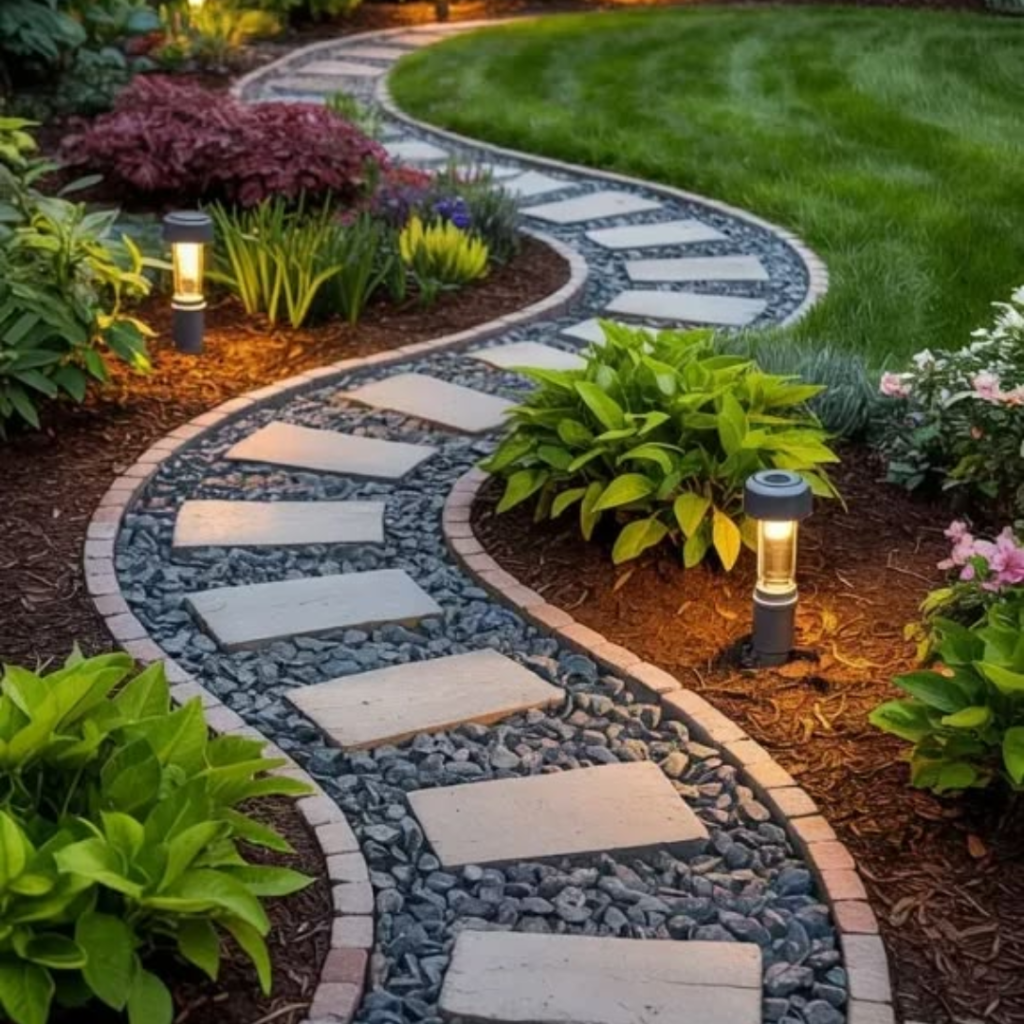
Straight paths are efficient. Curved paths are memorable.
Landscape designers often use curves because the human brain naturally finds them more visually appealing.
Why it works
Curves create anticipation and make small spaces feel larger.
Tips
- Avoid overly sharp turns.
- Reveal focal points gradually.
- Use plants to soften edges.
Steps
- Mark gentle curves.
- Test walking comfort.
- Install pathway material.
- Add border planting.
Cost
Costs vary depending on materials but usually add 10% to 20% compared to straight paths due to increased labor.
Pros
- Makes gardens feel larger
- Creates visual interest
- Encourages exploration
Cons
- Slightly higher installation costs
- Requires careful planning
A curved pathway whispers instead of shouting. It invites you forward one step at a time.
Illuminated Garden Pathway for Evening Magic
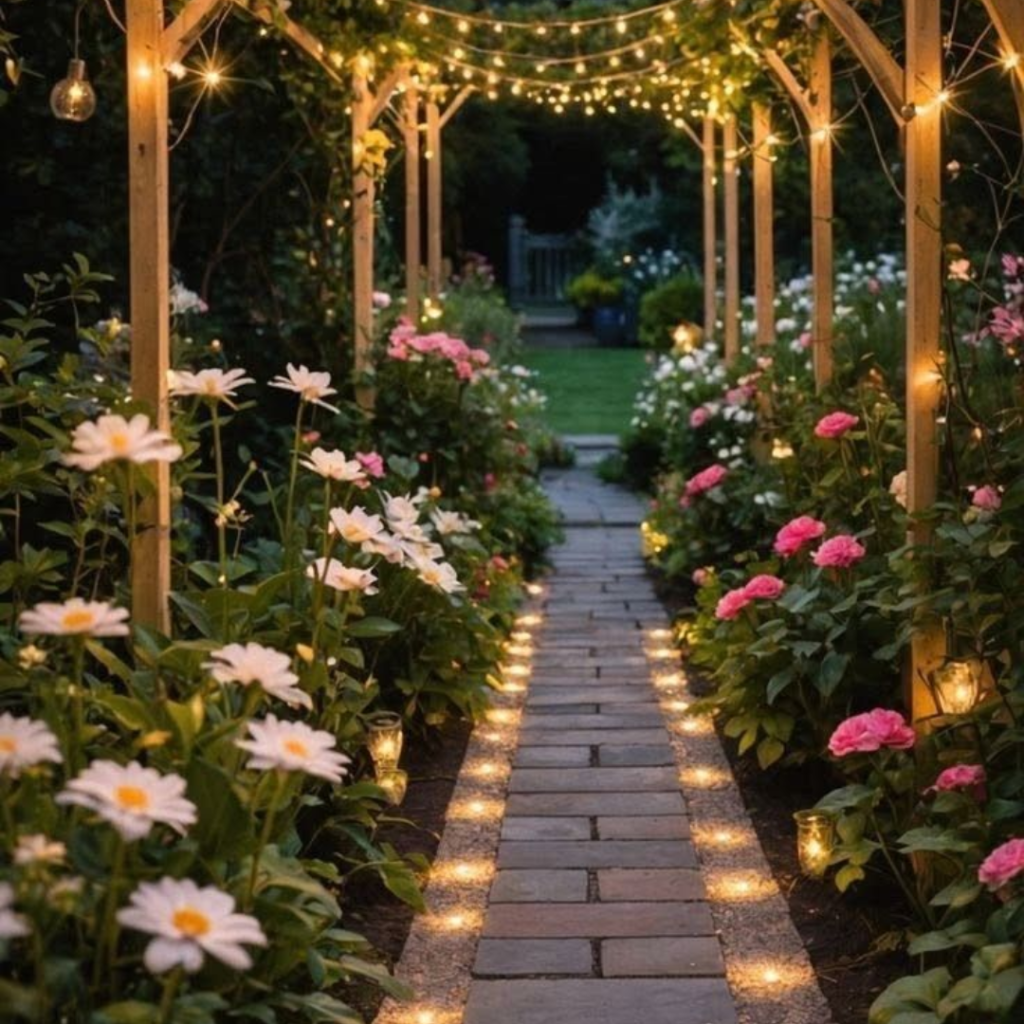
Lighting completely changes how a pathway feels after sunset.
Why it works
Path lighting improves safety while creating atmosphere.
Tips
- Use warm white bulbs.
- Avoid overly bright fixtures.
- Highlight focal plants and corners.
Steps
- Plan fixture locations.
- Install wiring or solar units.
- Test nighttime visibility.
- Adjust brightness levels.
Cost
- Budget solar lighting: $50 to $150
- Mid-range systems: $150 to $500
- Professional installations: $500 to $3,000+
Pros
- Improved safety
- Extended garden use
- Beautiful ambiance
Cons
- Maintenance requirements
- Bulb replacement
Path lighting turns ordinary gardens into movie scenes.
Boardwalk paths create an immediate vacation feeling.
Why it works
Wood introduces warmth and texture while elevating wet or uneven areas.
Tips
- Choose weather-resistant wood species.
- Seal regularly.
- Add anti-slip treatment.
Steps
- Build support frame.
- Install decking boards.
- Apply protective finish.
- Inspect annually.
Cost
- Budget: $10 to $20 per square foot
- Mid-range: $20 to $35 per square foot
- Premium hardwood installations: $35 to $60+ per square foot
Pros
- Unique appearance
- Comfortable walking surface
- Ideal for wet areas
Cons
- Maintenance requirements
- Higher long-term costs
Mosaic Pathway for Artistic Personality
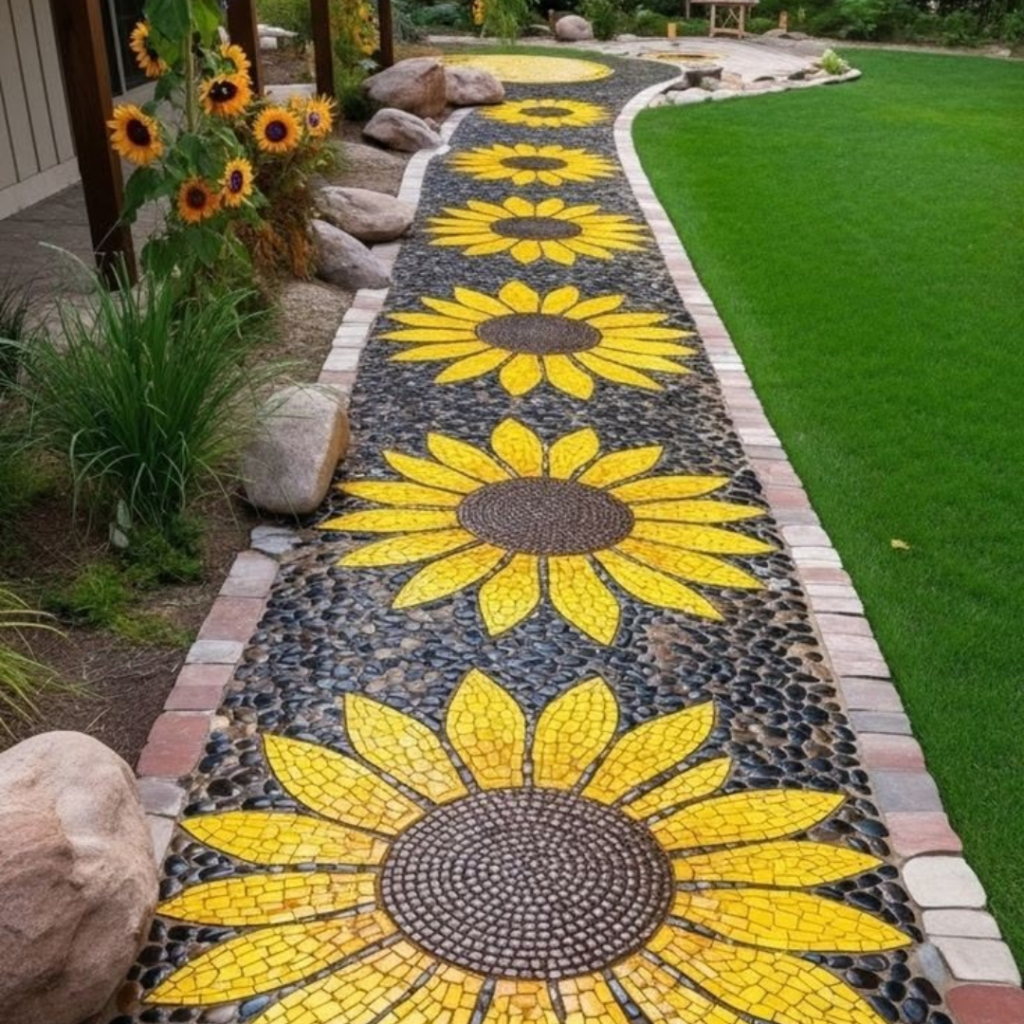
Mosaic pathways transform gardens into art galleries.
Why it works
Custom patterns create one-of-a-kind designs.
Tips
- Plan designs carefully.
- Use weather-resistant materials.
- Keep patterns readable from a distance.
Steps
- Design pattern layout.
- Prepare foundation.
- Install pieces carefully.
- Seal surface.
Cost
- Budget DIY: $200 to $500
- Mid-range: $500 to $2,000
- Professional artwork: $2,000 to $10,000+
Pros
- Completely unique
- Strong visual impact
- Personal expression
Cons
- Labor intensive
- Higher cost
Cottage Garden Pathway with Flowers on Both Sides
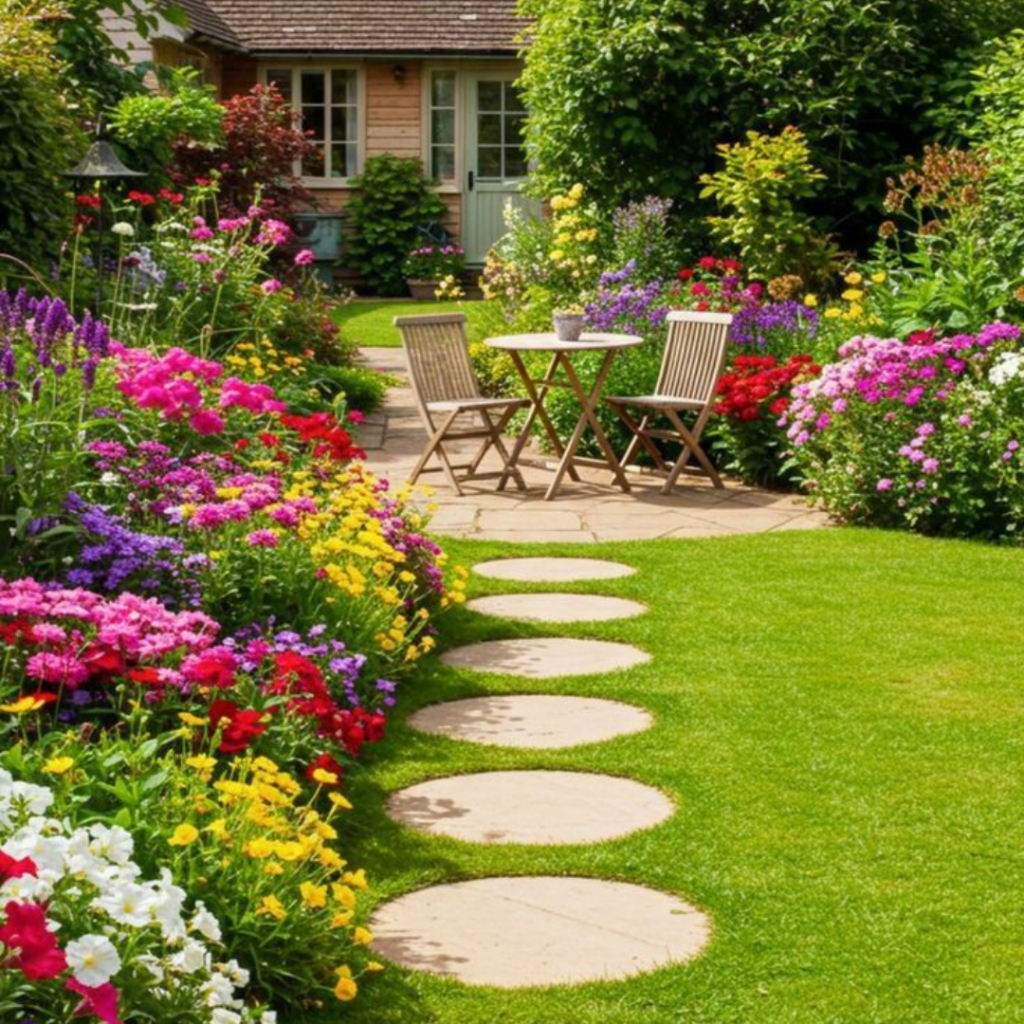
This is the pathway most people imagine when they hear the phrase dream garden.
Why it works
Flowers soften hard materials and create immersion.
Tips
- Layer plant heights.
- Include long blooming varieties.
- Add seasonal interest.
Steps
- Install pathway.
- Prepare planting beds.
- Add structural plants first.
- Fill with flowers.
Cost
- Path installation plus planting: $500 to $5,000+
Pros
- Exceptional beauty
- Supports pollinators
- Seasonal color
Cons
- Higher maintenance
- Seasonal pruning
Walking through flower-lined paths feels like entering another world entirely.
Modern Minimalist Pathway for Contemporary Gardens
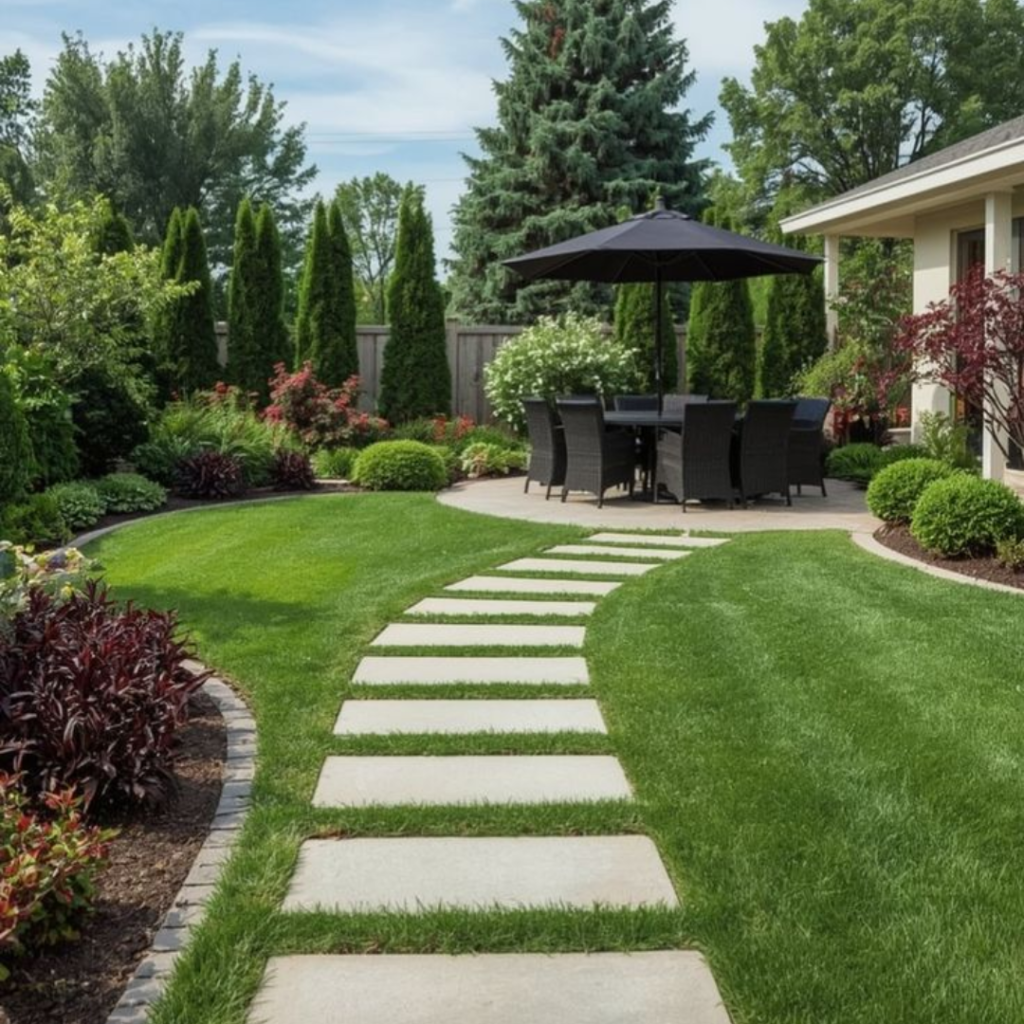
Minimalist pathways rely on simplicity rather than decoration.
Why it works
Clean lines create calm and order.
Tips
- Limit materials.
- Use geometric shapes.
- Keep planting simple.
Steps
- Choose material palette.
- Install precise layout.
- Add accent planting.
- Maintain regularly.
Cost
- Budget: $500 to $2,000
- Mid-range: $2,000 to $6,000
- Premium: $6,000 to $20,000+
Pros
- Elegant appearance
- Easy maintenance
- Timeless design
Cons
- Mistakes become highly visible
- Can feel cold without plants
Frequently Asked Questions
What is the cheapest garden pathway material?
Gravel is usually the most affordable option while still looking attractive and professional.
Which garden path lasts the longest?
Natural stone and brick pathways often last several decades when installed correctly.
Should garden pathways be straight or curved?
Curved paths create more visual interest, while straight paths provide efficiency. The best choice depends on your garden style.
How wide should a garden path be?
Most residential pathways work best between 3 and 4 feet wide for comfortable walking.
What is the easiest pathway to install yourself?
Stepping stones and gravel paths are generally the easiest DIY projects.
Does adding a garden pathway increase property value?
Well-designed pathways improve curb appeal and can contribute positively to perceived property value.
The best garden pathways do not simply move you from one place to another. They slow you down enough to notice the flowers, hear the birds, and remember why gardens exist in the first place.