
A kitchen should feel like a place where life slows down a bit. Not sterile. Not cluttered. Just balanced. A warm minimalist kitchen with green accents does exactly that—it blends simplicity with nature so the space feels calm but still alive.
I once walked into a kitchen like this in a small home renovation project. Nothing flashy. White oak cabinets, soft matte white walls, and just enough green—potted herbs on the counter and muted sage tiles behind the stove. It didn’t scream for attention. It whispered comfort. That’s the goal here.
Let’s break it down in detail so you can build it step by step, whether you’re renovating fully or just tweaking your current kitchen.
Understanding the Concept of Warm Minimalist Kitchen with Green Accents
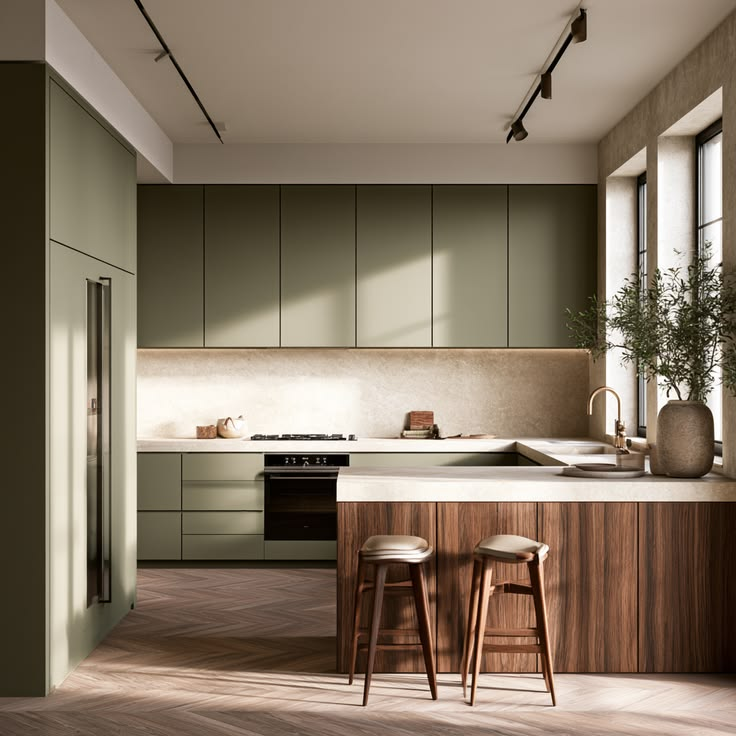
A warm minimalist kitchen with green accents combines three ideas: minimalism, warmth, and natural color psychology.
Minimalism removes clutter. Warmth adds comfort through materials like wood and soft lighting. Green accents bring life, freshness, and a connection to nature.
Studies in environmental psychology show that exposure to green tones can reduce stress by up to 15–20% and improve focus. That’s why hospitals, offices, and wellness spaces often use green elements.
Tips
- Stick to neutral base colors like white, beige, cream, or soft gray
- Use green sparingly (10–20% of the visual space)
- Focus on natural materials like wood, stone, and linen textures
Steps
- Decide your base palette (light + warm neutrals)
- Choose green accent areas (tiles, plants, décor)
- Remove unnecessary visual clutter
- Introduce natural textures gradually
Cost
- Budget setup: $300–$1,000 (plants, paint, décor)
- Full remodel: $5,000–$25,000 depending on materials
Pros
- Timeless design style
- Easy to maintain visually
- Promotes calmness and focus
Cons
- Requires discipline to avoid clutter
- Poor execution can feel too plain
Choosing the Right Base Colors for Warm Minimalism
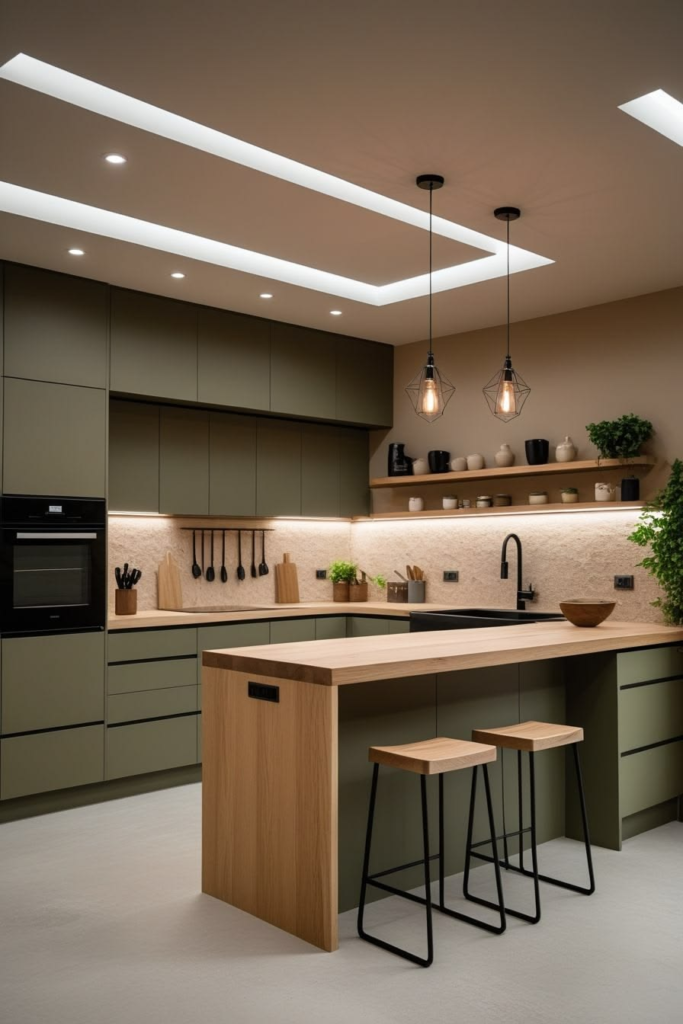
The base color is the “silent backbone” of your kitchen. Without it, green accents won’t shine properly.
Most warm minimalist kitchens use off-white, warm beige, taupe, or soft sand tones. These colors reflect light beautifully and make small kitchens appear larger.
According to interior design surveys, light neutral kitchens increase perceived space by up to 30% visually, especially in urban apartments.
Tips
- Avoid pure stark white—it feels cold
- Use warm undertones like ivory or cream
- Match wall and cabinet tones subtly
Steps
- Test paint samples in natural daylight
- Compare how they look in morning vs evening
- Choose the warmest tone that still feels clean
- Keep ceiling lighter than walls for openness
Cost
- Paint: $50–$150 per room
- Cabinet refinishing: $500–$3,000
Pros
- Makes kitchen feel larger
- Works with any décor style
- Easy to update later
Cons
- Can feel flat without texture
- Needs green accents for personality
Using Green Accents Without Overdoing It
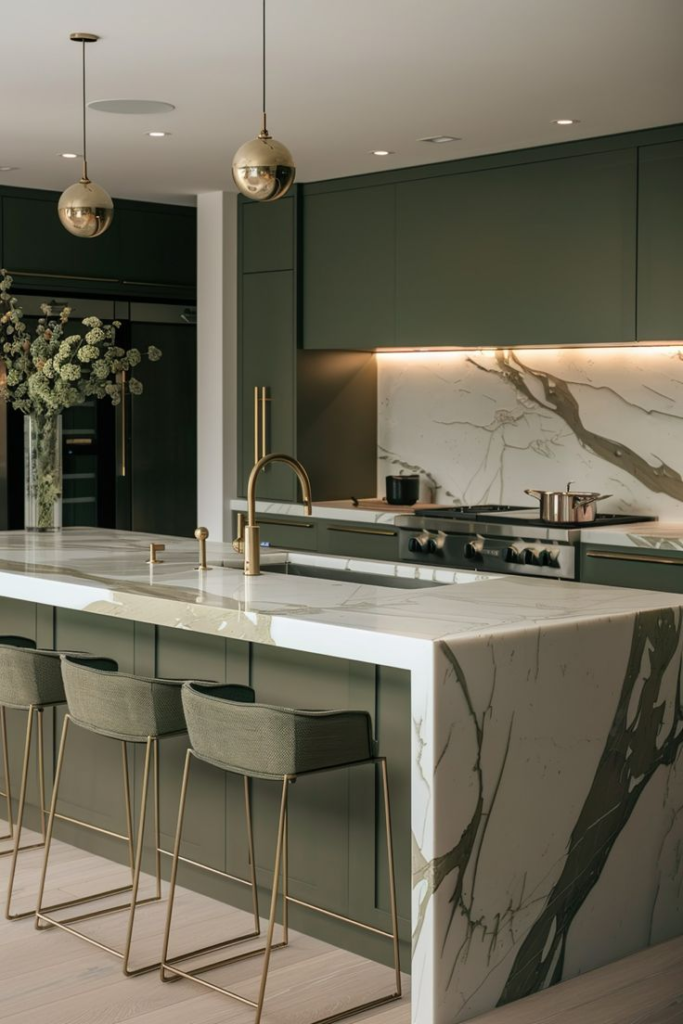
Green is powerful. Too much of it and your kitchen feels like a jungle; too little and it disappears.
The trick is balance. Think of green like seasoning in food—you don’t dump it in, you sprinkle it carefully.
Popular green shades include sage green, olive green, eucalyptus, and muted forest green. These tones are trending because they feel organic, not artificial.
Tips
- Use green in 3–5 key spots only
- Stick to muted tones rather than neon shades
- Combine green with wood for harmony
Steps
- Pick 2 green tones max
- Assign them to different elements (tiles, plants, textiles)
- Repeat color at least 2–3 times in space for consistency
- Avoid mixing too many green variations
Cost
- Paint accent wall: $100–$300
- Green tiles backsplash: $500–$2,000
- Plants: $5–$50 each
Pros
- Brings natural freshness
- Easy to change seasonally
- Adds personality to minimal space
Cons
- Overuse can dominate space
- Wrong shade can clash with warm tones
Materials That Define Warm Minimalist Kitchens
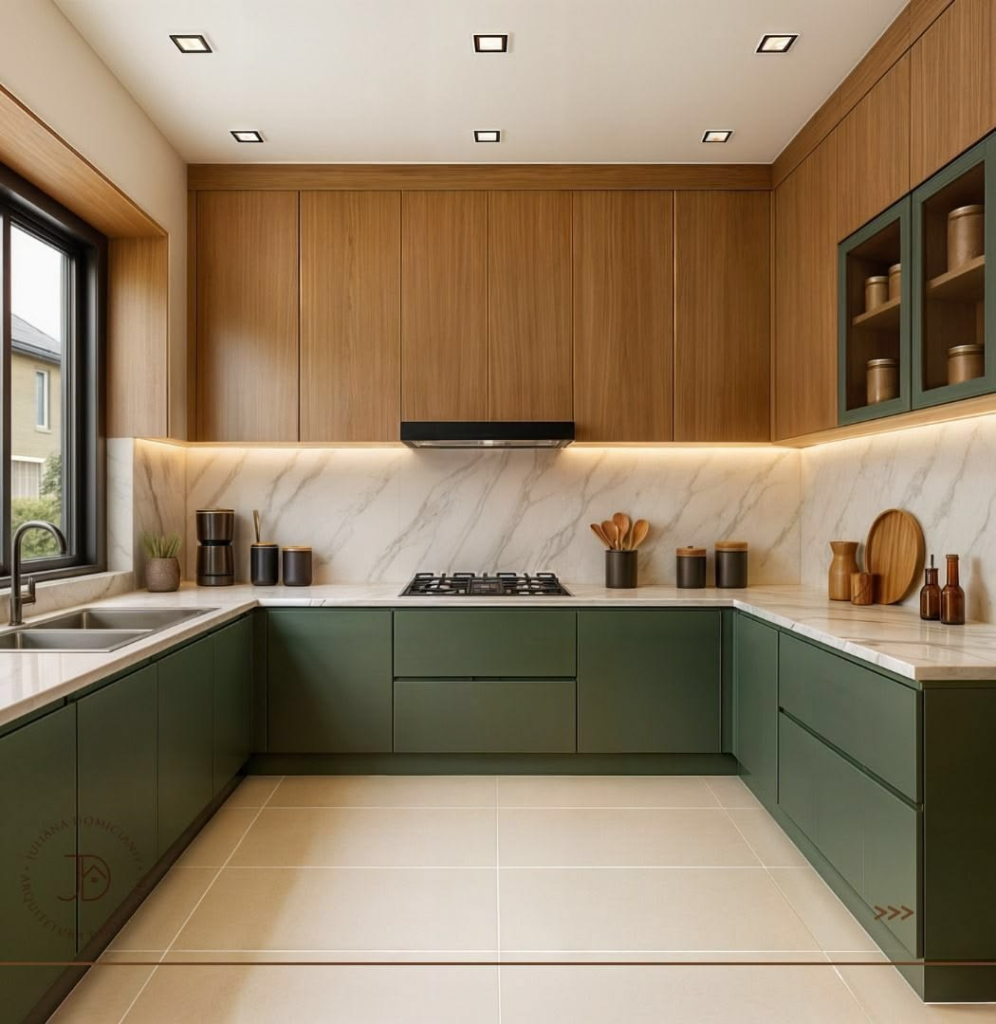
Materials are where the “warm” part truly lives. Without texture, minimalism feels cold and empty.
The most common materials include natural wood, matte stone, brushed metal, and ceramic surfaces. White oak alone accounts for nearly 40% of modern minimalist kitchen cabinetry trends globally due to its soft grain and warm tone.
Tips
- Mix at least two textures (wood + stone works best)
- Prefer matte finishes over glossy ones
- Keep metals soft (brushed brass or black steel)
Steps
- Choose primary cabinet material (wood preferred)
- Select countertop (stone or quartz)
- Match hardware finish consistently
- Avoid shiny plastics or high-gloss laminates
Cost
- Wood cabinets: $2,000–$10,000
- Quartz countertops: $1,500–$5,000
- Hardware: $50–$300
Pros
- Long-lasting aesthetic
- Feels natural and grounded
- High resale value
Cons
- Higher upfront cost
- Requires maintenance for natural materials
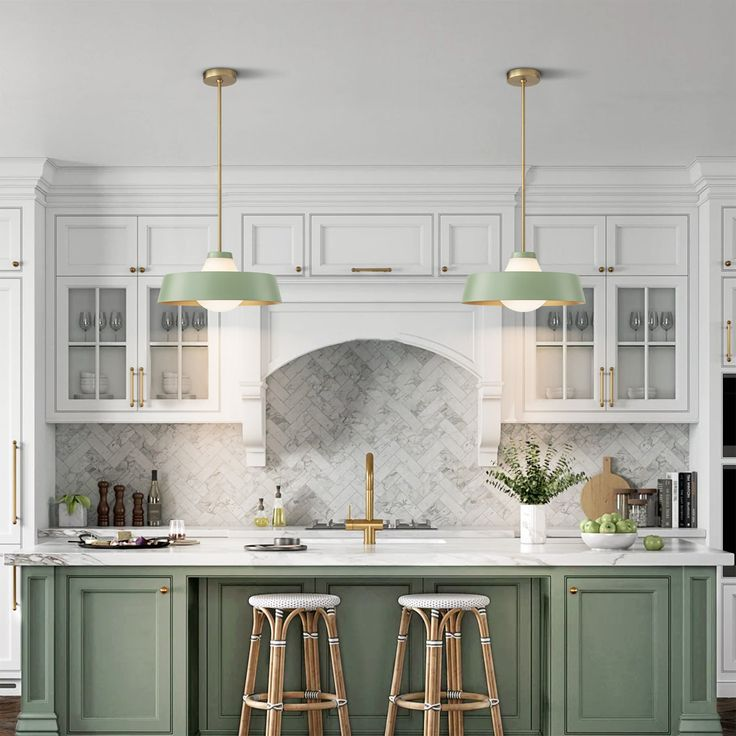
Lighting in a warm minimalist kitchen with green accents is like sunlight through trees—it shapes everything.
Warm lighting (2700K–3000K) enhances wood tones and makes green accents feel softer and more natural.
Research shows that proper kitchen lighting improves mood and productivity in home cooking by up to 25%.
Tips
- Use layered lighting: ambient, task, and accent
- Avoid harsh white LED lights
- Install under-cabinet lighting for depth
Steps
- Install ceiling ambient lights
- Add pendant lights above island or dining area
- Install LED strips under cabinets
- Highlight green accents with soft spotlights
Cost
- Basic lighting setup: $150–$500
- Premium layered lighting: $800–$3,000
Pros
- Enhances mood instantly
- Makes kitchen look more expensive
- Improves functionality
Cons
- Poor placement creates shadows
- Installation may require electrician
Accessories and Styling Details That Complete the Look
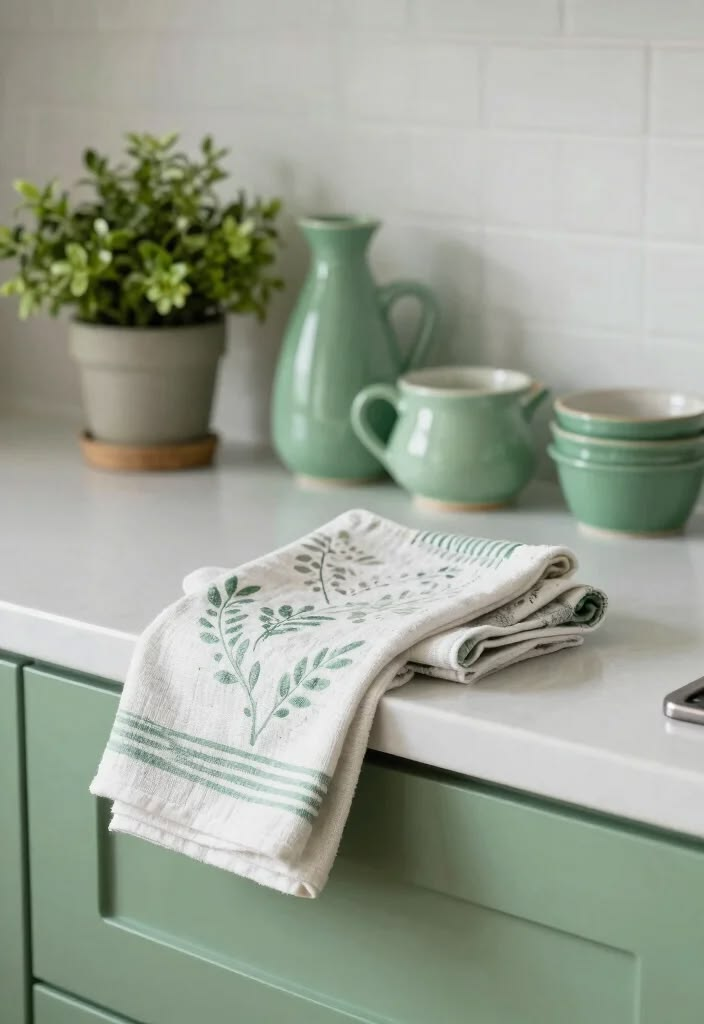
This is where personality comes in. Think of accessories as “soft whispers” in your kitchen design.
Examples include ceramic bowls, linen towels, wooden cutting boards, and matte green jars.
Tips
- Stick to neutral + green color harmony
- Avoid plastic items on display
- Rotate décor seasonally
Steps
- Select 5–10 core accessories
- Group items in small clusters
- Leave empty visual space intentionally
- Refresh every few months
Cost
- Styling items: $50–$500
- Premium décor pieces: $500+
Pros
- Easy to update look
- Adds personality
- Affordable transformation
Cons
- Easy to over-decorate
- Requires restraint
Maintenance and Long-Term Care
A warm minimalist kitchen is easy to maintain, but only if you stay consistent.
Studies show that clutter returns within 7–10 days if not actively managed.
Tips
- Clean surfaces daily (5–10 minutes)
- Reorganize monthly
- Replace dying plants immediately
Steps
- Set weekly cleaning schedule
- Do monthly decluttering
- Refresh green elements seasonally
- Inspect storage efficiency regularly
Cost
- Cleaning supplies: $20–$100/month
- Plant replacement: $10–$50
Pros
- Long-lasting aesthetic
- Healthy environment
- Stress-free cooking space
Cons
- Requires routine discipline
- Neglect quickly ruins minimalism
FAQs About Warm Minimalist Kitchen with Green Accents
What is a warm minimalist kitchen with green accents?
It’s a kitchen design style that combines minimal clutter, warm neutral tones, and natural green elements like plants or muted green décor.
Is green a good color for kitchens?
Yes. Green promotes calmness and is associated with nature. Studies suggest it can reduce stress and improve focus.
How much does it cost to design this style kitchen?
It ranges from $300 for small upgrades to $25,000+ for full renovations, depending on materials and scale.
Can I create this style in a small kitchen?
Yes. In fact, small kitchens benefit the most because minimalism makes them appear larger and more open.
What green shades work best?
Muted tones like sage, olive, eucalyptus, and soft forest green work best with warm minimalism.
How do I avoid making it look too plain?
Use texture layering—wood, stone, plants, and lighting—to add depth without clutter.


